
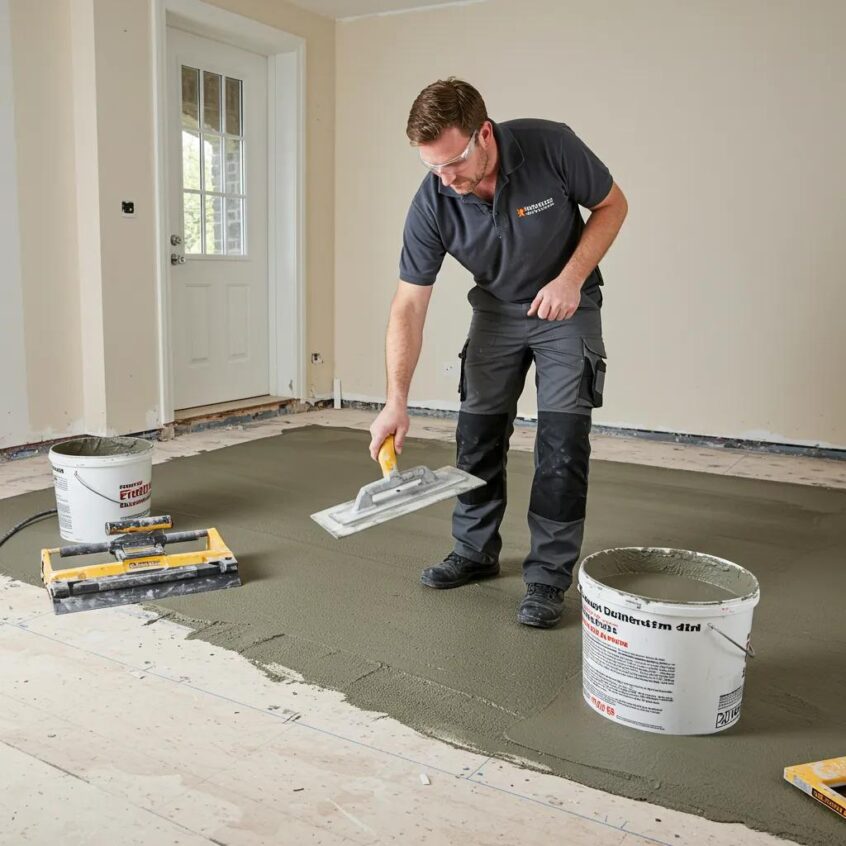
Mastering Subfloor Perfection: Your Guide to Professional Floor Leveling
Substandard subfloors can sabotage even the most beautiful new flooring, leading to premature wear, unsightly imperfections, and potential safety concerns. This comprehensive guide will walk you through the significant advantages of professional floor leveling, its crucial role in any flooring project, its application in commercial settings, cost considerations for Vancouver and Fraser Valley, the meticulous process our local experts employ, how to choose a reliable service provider, and clear answers to your most pressing floor leveling questions. At New Level Floors, we specialize in expert floor leveling, offering precise subfloor assessment, meticulous preparation, and expert application of self-leveling compounds throughout Fraser Valley and Metro Vancouver, all with a complimentary consultation or quote. By the time you finish reading, you’ll fully appreciate why investing in professional floor leveling is the key to ensuring lasting durability, stunning visual appeal, enhanced comfort, superior safety, and significant long-term savings for both your home and business.
What Are the Key Benefits of Professional Floor Leveling?
Professional floor leveling establishes a flawlessly smooth and exceptionally stable subfloor, providing the ideal foundation for any new flooring installation. By expertly addressing dips, peaks, and any surface irregularities, this essential service bolsters foundational integrity, prevents premature wear and tear, and optimizes the adhesion of all floor coverings. New Level Floors utilizes cutting-edge assessment techniques and precision-graded self-leveling compounds to guarantee consistent, high-performance results for homes and businesses alike.
How Does Floor Leveling Enhance Durability and Longevity?
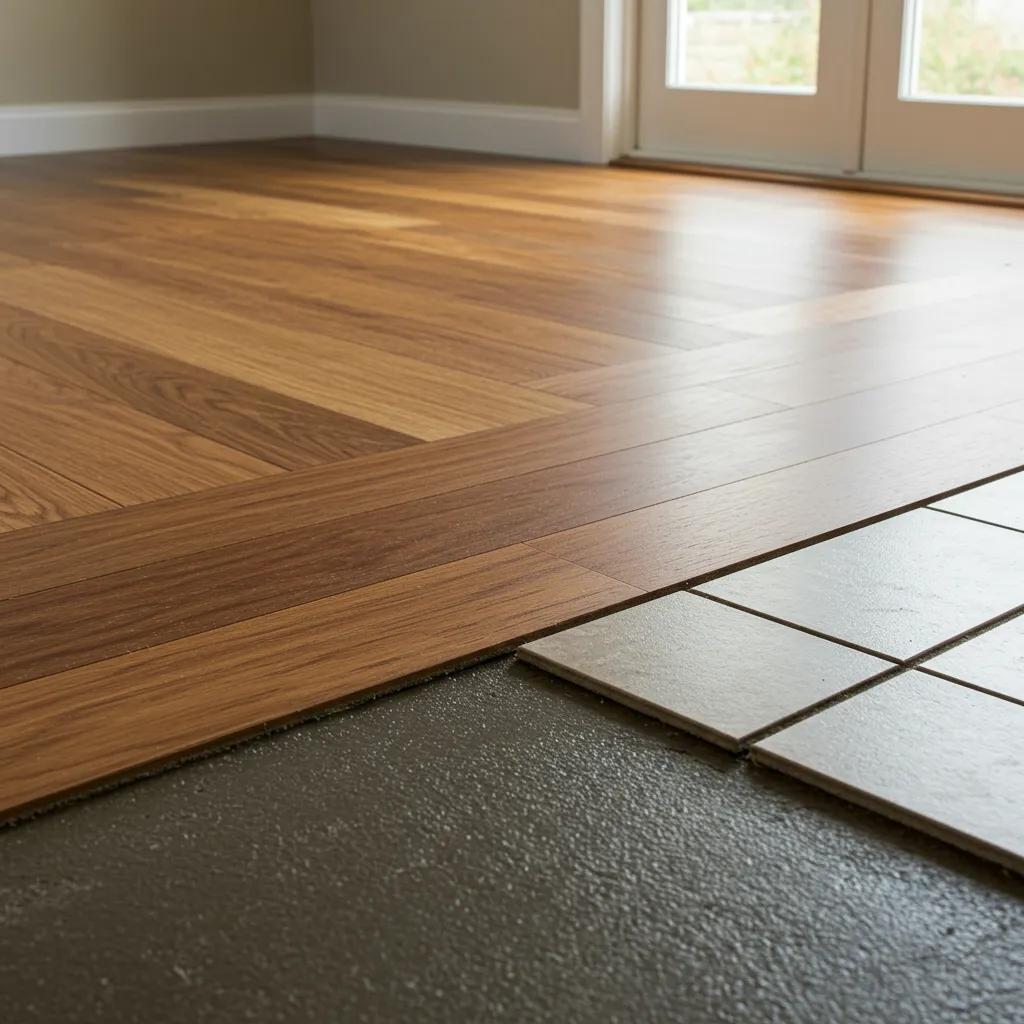
Floor leveling significantly boosts durability and longevity by eliminating concentrated pressure points and ensuring that loads are distributed evenly across the entire subfloor. When weight is applied uniformly, flooring materials like hardwood, tile, or vinyl are far less susceptible to cracking, joint separation, and adhesive failure. For instance, a perfectly level tile surface prevents undue stress on grout lines and can extend the lifespan of your tiles by up to 50 percent compared to installations on uneven bases.
In What Ways Does Floor Leveling Improve Aesthetics and Property Value?
Floor leveling dramatically enhances aesthetics and boosts property value by creating a pristine, flawless finish that truly showcases high-end materials and meticulous installation details. A perfectly flat subfloor eliminates distracting visible seams or surface undulations that detract from the visual harmony of elegant hardwood planks or sophisticated stone tiles. This seamless appearance not only elevates curb appeal but can significantly increase a property’s resale value by projecting an image of superior craftsmanship.
How Does Floor Leveling Increase Safety and Comfort?
Floor leveling enhances safety and comfort by effectively removing tripping hazards and minimizing unwanted sound transmission. By eliminating sudden changes in elevation, the risk of falls in busy areas is substantially reduced. Furthermore, a consistent, smooth surface helps to dampen footfall noise and structural vibrations. Both tenants and visitors will appreciate smoother transitions between rooms, and business owners can reduce liability by ensuring a uniformly safe walking surface for everyone.
Why Is Floor Leveling a Cost-Effective Investment?
Floor leveling proves to be a highly cost-effective investment because it proactively prevents expensive future repairs, ensures that your flooring warranty remains valid, and significantly extends the overall lifespan of your flooring. By addressing subfloor issues before installation, property owners can avoid the substantial costs associated with replacing cracked tiles, warped boards, or failing adhesives. Over the long term, a level foundation leads to reduced maintenance cycles and can contribute to savings of up to 30 percent on total flooring expenses.
Before we delve into how this process specifically benefits new flooring installations, let’s consider how these fundamental advantages translate into tangible, measurable results:
This table clearly illustrates how professional floor leveling fundamentally transforms foundational characteristics to support enduring performance. Understanding these advantages truly underscores the critical importance of meticulous subfloor preparation in every single installation.
Why Is Floor Leveling Important for New Flooring Installations?
A perfectly level subfloor is absolutely essential for any new flooring installation, as it prevents premature damage, guarantees proper adhesion, and ensures that manufacturer warranties remain valid. Uneven surfaces create concentrated stress points that inevitably lead to material failure and can void coverage guarantees. For example, engineered wood installed over an uncorrected dip can easily gap and buckle under normal foot traffic, whereas a level surface provides consistent support and preserves warranty validity.
What Problems Do Uneven Floors Cause for Flooring Materials?
Uneven floors create critical stress points and unsightly gaps that lead to cracking, warping, and accelerated wear of flooring materials by preventing uniform load transfer and compromising adhesive bonds. When subfloor irregularities exceed manufacturer-specified tolerances, tile substrates can fracture, and wood planks can cup or buckle. These issues necessitate costly repairs or premature replacement, preventing you from enjoying the full intended lifespan of your chosen flooring.
How Does a Level Subfloor Protect Flooring Warranties?
A level subfloor is crucial for protecting your flooring warranties because it meets the strict flatness tolerances demanded by tile, hardwood, and vinyl manufacturers. By delivering a surface within specified deviation limits—often as precise as 3 mm over a 3 m span—professional floor leveling ensures full compliance with warranty conditions. This proactive measure safeguards your investment by preserving coverage for both material defects and installation faults.
What Role Does Subfloor Preparation Play in Flooring Longevity?
Meticulous subfloor preparation plays a pivotal role in ensuring the longevity of your flooring by establishing optimal moisture control, promoting superior surface adhesion, and guaranteeing structural stability. Proper cleaning, priming, and crack repair create the ideal environment for self-leveling compounds to bond effectively. These essential preparatory steps prevent moisture migration, significantly reduce the risk of delamination, and provide continuous load distribution, thereby extending the service life of any new floor covering.
What Are the Advantages of Commercial Floor Leveling Services?
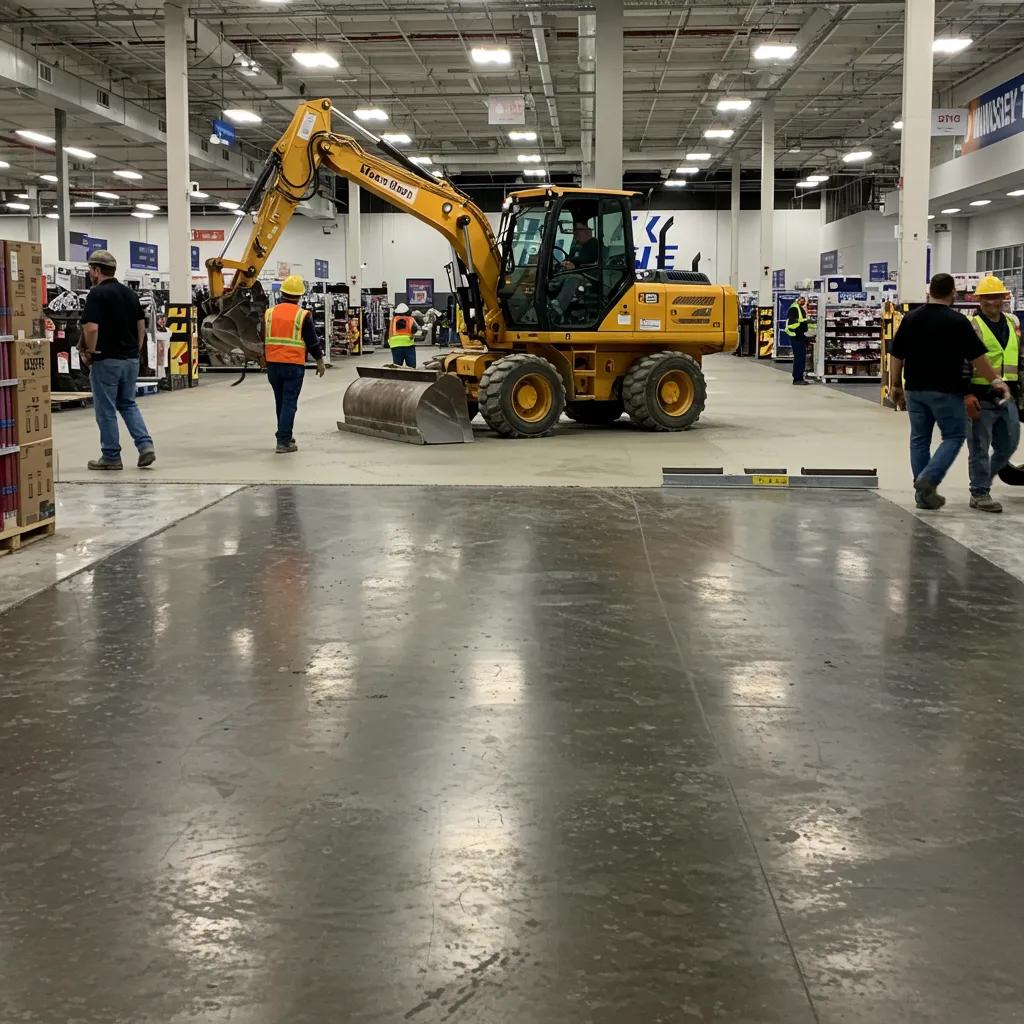
Commercial floor leveling services are designed to create robust, exceptionally durable surfaces capable of withstanding heavy traffic, significant equipment loads, and rigorous cleaning protocols. We utilize industrial-grade self-leveling concrete and advanced polymer-modified systems that are highly resistant to impact, abrasion, and chemical exposure. New Level Floors expertly applies these high-performance substrates in retail, hospitality, and industrial settings to meet demanding operational requirements and stringent regulatory standards.
How Does Floor Leveling Improve Durability in Commercial Spaces?
Floor leveling significantly enhances durability in commercial spaces by employing reinforced leveling compounds specifically engineered to withstand high point loads and constant foot or equipment traffic. These reinforced underlayments distribute weight evenly, effectively preventing localized cracking and surface degradation, even under the stress of pallet jacks, forklifts, or high-heeled shoes. This enhanced substrate strength translates directly into reduced downtime for maintenance and supports uninterrupted business operations.
What Safety Benefits Does Floor Leveling Provide for Businesses?
Floor leveling offers substantial safety benefits for businesses by eliminating hazardous uneven transitions that can lead to dangerous slips, trips, and costly liability claims. A uniformly flat floor surface not only meets crucial accessibility requirements but also significantly reduces the risk of accidents in both public and employee areas. By smoothing out abrupt changes in elevation, commercial floor leveling actively contributes to compliance with workplace safety regulations and fosters a secure, accident-free environment.
Why Is Self-Leveling Concrete Ideal for Commercial Applications?
Self-leveling concrete is the ideal choice for commercial applications due to its remarkably rapid installation, precise thickness control, and exceptional compressive strength. Its fluid properties allow it to effortlessly flow into low spots and form a perfectly smooth surface without the need for extensive manual troweling. Quick-dry formulations enable same-day foot traffic or a rapid turnaround for new flooring installation, minimizing business disruptions and significantly accelerating project timelines.
How Much Does Professional Floor Leveling Cost in Vancouver and Fraser Valley?
The cost of professional floor leveling can vary depending on several factors, including the subfloor’s current condition, the overall project size, the specific type of compound used, and the complexity of site access. Typical rates range from moderate per square foot for straightforward self-leveling installations to higher rates for deep-fill repairs and specialized reinforced systems. A thorough site assessment conducted by New Level Floors is essential to determine the precise scope of work and provide a detailed, accurate cost estimate.
What Factors Influence the Cost of Floor Leveling Services?
A variety of factors can influence the overall cost of floor leveling services:
- Subfloor Condition and any necessary repairs required prior to leveling.
- Depth of Compound Application and the total volume of material needed.
- Type of Compound selected, such as standard self-leveling or advanced polymer-modified systems.
- Site Accessibility and the complexity of preparation work involved.
These variables collectively shape the total investment by impacting labor hours, material expenses, and equipment requirements. A clear understanding of each factor is key to aligning your budget expectations with your project goals.
How Does Professional Leveling Save Money Long-Term?
Professional leveling offers significant long-term cost savings by preventing potential structural failures, ensuring that your flooring warranty remains valid, and minimizing ongoing maintenance needs. A stable, level subfloor drastically reduces the frequency of flooring replacements and costly repair interventions. Property owners often find that the initial investment in leveling is quickly recovered through extended flooring lifespan and reduced operational downtime.
Are Free Consultations and Quotes Available for Floor Leveling?
Absolutely! New Level Floors proudly offers complimentary consultations and detailed quotes for all floor leveling inquiries. Our professional assessment evaluates your subfloor conditions, recommends the most appropriate leveling solutions, and provides a transparent, itemized cost estimate. This no-cost, no-obligation evaluation empowers homeowners, business owners, and contractors to make fully informed decisions with complete confidence.
What Is the Floor Leveling Process Used by Experts in Fraser Valley and Metro Vancouver?
Our expert floor leveling process begins with a comprehensive subfloor assessment, followed by meticulous preparation, precise compound application, and controlled curing. By expertly combining advanced diagnostic tools with industry-leading materials, New Level Floors guarantees a uniform, moisture-resistant surface that is perfectly prepared for any new flooring system.
How Is the Subfloor Assessed and Prepared?
Subfloor assessment and preparation involve critical steps such as moisture testing, thorough crack repair, and meticulous surface cleaning to ensure optimal adhesion. Our skilled technicians accurately measure moisture content, precisely identify elevation variances, and expertly repair any delamination or spalling. After priming the surface, mechanical profiling or shot blasting is employed to create a textured substrate that maximizes bonding strength.
What Types of Leveling Compounds Are Applied?
The following table outlines common leveling compounds, their key properties, and their typical applications:
Each compound is carefully selected based on the specific project requirements, ensuring an optimal balance of workability, strength, and cure time tailored precisely to the installation conditions.
Research indicates that polymer-modified cement (PMC) compounds are investigated for their basic properties as a top coat with thin thickness, typically 5–15 mm.
Performance of Polymer-Modified Self-Leveling Mortars for Floor Finishing
The self-leveling materials using four types of polymer-modified cement (PMC) were investigated for their basic properties as a top coat with thin thickness, typically 5–15 mm.
Performance of polymer-modified self-leveling mortars with high polymer–cement ratio for floor finishing, J Do, 2003
How Long Does the Floor Leveling Process Take?
The entire floor leveling process typically takes between one to two days to complete, encompassing assessment, preparation, compound placement, and initial curing. Standard self-leveling compounds often permit light foot traffic within four to six hours and achieve a full cure within 24 hours. More complex jobs requiring deep-fill systems or specialized polymer modifications may necessitate extended cure times, but we always ensure efficient scheduling for subsequent flooring installation.
How Can Homeowners and Contractors Choose the Right Floor Leveling Service?
Selecting the ideal floor leveling service involves carefully evaluating expertise, local presence, the quality of materials used, and the availability of after-sales support. Credentials such as industry certifications, a portfolio of successful projects in Fraser Valley and Metro Vancouver, and transparent pricing are all strong indicators of professional reliability. New Level Floors stands out by offering tailored solutions, utilizing advanced material selection, and maintaining an unwavering commitment to complete customer satisfaction.
What Should You Look for in a Professional Floor Leveling Company?
When you’re choosing a professional floor leveling company, prioritize clear project documentation, demonstrable expertise, and positive local references. Verify that technicians consistently perform moisture testing, exclusively use high-quality leveling compounds, and strictly adhere to manufacturer guidelines. A reputable provider will clearly outline the scope of work, warranty details, and cleanup procedures before commencing any project.
How Does New Level Floors Tailor Solutions for Different Client Needs?
New Level Floors excels at tailoring solutions by precisely matching compound types, application techniques, and project workflows to each client’s unique requirements. Residential projects often prioritize speed and minimal disruption, while commercial jobs focus on maximum durability and impeccable cleanliness. By customizing subfloor preparation and material selection, we consistently deliver optimal outcomes for homeowners, business owners, and contractors alike.
What Are the Benefits of Requesting a Free Consultation or Quote?
Requesting a free consultation or quote provides unparalleled transparency in cost, crystal-clear understanding of the process, and absolute confidence in your project planning. This no-obligation evaluation offers detailed insights into subfloor conditions, recommended leveling systems, and precise timelines. Armed with this comprehensive information, property owners can budget effectively and schedule installations with complete certainty.
What Are Common Questions About Floor Leveling Answered?
Professional floor leveling involves intricate technical steps, specific material choices, and careful scheduling considerations that naturally lead to frequent questions. The following answers provide clear, concise information on compound benefits, safety enhancements, structural repairs, and project timelines.
What Are the Advantages of Using Self-Leveling Concrete?
Self-leveling concrete offers the distinct advantages of rapid installation, effortless fluid coverage of low spots, and high compressive strength by naturally flowing into irregularities and curing to form a hard, uniform surface. Its inherent self-smoothing properties significantly reduce troweling labor and create the perfect base for virtually any floor finish. This compound’s quick-dry formulations are instrumental in supporting efficient project timelines and enabling early flooring installation.
It is important to note that there isn’t a single universal set of criteria for selecting a self-leveling compound, as needs can vary significantly.
Selecting Self-Leveling Compounds for Floors: Key Criteria
In conclusion, there is no unique set of criteria for use in selecting a self-leveling compound.
Testing of Selected Self-leveling Compounds for Floors, 1995
How Does Floor Leveling Prevent Tripping Hazards?
Floor leveling effectively prevents tripping hazards by eliminating abrupt changes in elevation that often occur at ridges, dips, or unaddressed slopes. A uniformly flat surface removes uneven transitions between rooms or different flooring types, significantly reducing the risk of incidents. This crucial step contributes to safer walkways in residential hallways, commercial corridors, and all public access areas.
Can Floor Leveling Fix Moisture and Structural Issues?
Yes, floor leveling can effectively address minor moisture and structural issues by incorporating specialized moisture-resistant primers, protective membrane systems, and crack-repair mortars prior to compound application. Proper subfloor preparation seals small cracks and effectively prevents moisture migration from concrete slabs. For more significant structural repairs, specialized patching systems are employed to restore integrity before the final leveling process.
How Soon Can New Flooring Be Installed After Leveling?
New flooring can typically be installed within 24 to 48 hours after standard self-leveling concrete has cured sufficiently to allow light foot traffic. Rapid-set formulations even permit some floor coverings to be installed in as little as four hours. While complex or heavy-duty compounds might require extended cure times, our professional scheduling ensures minimal project delays.
Professional floor leveling transforms uneven, problematic subfloors into smooth, resilient foundations that are essential for durable, visually appealing, and safe flooring installations. By partnering with New Level Floors, homeowners, business owners, and contractors throughout Fraser Valley and Metro Vancouver gain access to unparalleled expert subfloor assessment, premium self-leveling compounds, and meticulously tailored solutions for every project. Request your free consultation or quote today to ensure your next flooring investment delivers lasting performance, aesthetic excellence, and complete peace of mind.